We often hear about research on genetics, and of late the term epigenetics has surfaced. But what do we mean by these terms and why are they important? This article takes us back to some basics about our make up as humans and our differences as individuals.
Basic Genetics
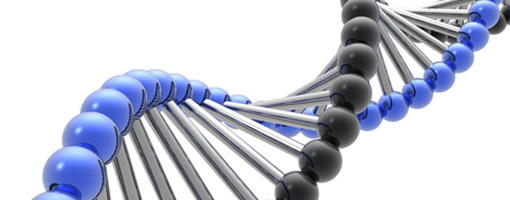
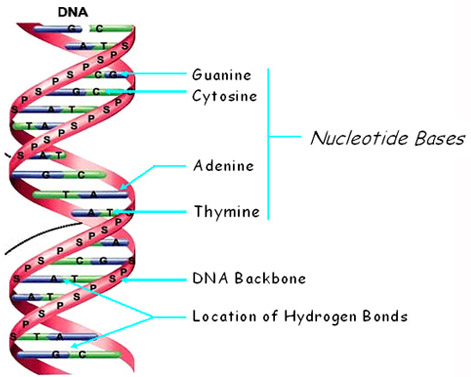
Deoxyribo Nucleic Acid, DNA for short, is a very important substance. It resembles two long hair-like strands twisted around each other like a spiral staircase. Each strand of DNA consists of a "backbone" of ribose (a sugar) together with phosphate groups and nitrogen bases. The importance of DNA stems from the fact that it contains what is known as the genetic code for an individual. The features and characteristics that a person has are controlled by the DNA (for example, hair colour, eye colour and height). This tiny molecule carries the information for everything from eye colour to the structure of critical organs such as the heart and lungs. DNA is also responsible for the variation between individuals.
Where is DNA located?
DNA is present in every cell in our body. Within each cell is a small compartment, the nucleus, in which the DNA is contained. In this nucleus the DNA strands are rolled along with specific molecules known as histones and are then referred to as chromosomes.
So, how does DNA carry out its important functions?
Well the first thing to consider is where the information is stored on the DNA. Along the DNA there are specific sections which contain what are known as genes. These genes are the sections of DNA which actually dictate the characteristics of an individual. The information for making all of the protein molecules, hair, nails, skin, and the hormones within the human body is contained on genes within the cell. The variation between individuals is controlled by genes. Genes of the same type can carry different information. For example, the gene for brown eyes and the gene for green eyes are both carried on the same DNA strand in the same position but, they carry slightly different information and so there is variation within the species. Basically, there are slightly different versions of the same gene which result in variation. This is the case for most characteristics where there is more than one type of gene for each characteristic. When the characteristic which a gene has the information for is made, it is known as gene expression. During gene expression, the information contained within the gene is converted into a protein molecule or a hormone.
How is DNA arranged?
There are 23 different types of DNA strands in humans. Each of our cells have two of each type; one which we got from our mother and the other from our father. So in total, each cell has 46 DNA strands arranged around the histones into chromosomes.
Genetics is an important part of biology which deals with the study of DNA. Genetic research has increasingly indicated that as important as DNA is to determining the characteristics of an individual, it may not be the only thing at the cellular level of the individual which controls human characteristics.
Epigenetics
Initial research into genetics indicated that the DNA was responsible for all the characteristics of an organism. Recent findings indicate that it is not quite that simple. Epigenetics is the study of some of the other factors or genetic controls which affect the characteristics of an organism.
Each cell in an individual possesses identical DNA. Although these cells all contain the same genetic information, different groups of cells within the same organism look and behave very differently from each other. For example, a nerve cell (neuron) looks and behaves very differently from a skin cell. So how does it happen that two cells with identical DNA can have such different characteristics? The reason for this is gene expression. Although the two cells in an individual have identical DNA, there is a regulatory system which allows only some of the genes to be expressed in any given cell. Epigenetics studies the way in which gene expression is encouraged or inhibited within cells.
How is the expression of the genes within the DNA controlled?
There are two main mechanisms by which this is carried out.
The first has to do with DNA modification. In this process, a small molecule, known as a methyl group, is attached to specific points of the DNA which results in a gene being 'silenced'. When a methyl group is attached to DNA, all of the enzymes and other molecules associated with expressing the gene cannot bind with the DNA and carry out their function. When the methyl group is attached to the DNA, the DNA is methylated, and methylated DNA is silent DNA.
The second mechanism of gene regulation has to do with secondary molecules which are associated with DNA within the cell. When a cell is observed under a microscope, what is referred to as the DNA are the hair-like structures contained within the nucleus. These hair-like structures are chromatin. For the sequence of DNA to become chromatin, it wraps around protein molecules known as histones. These histones, similar to the DNA itself, can be modified to encourage gene expression or make it more difficult. Molecules can bind to the histones and make the chromatin pack more tightly around the histone making gene expression difficult. Conversely different molecules can bind to the histone which results in the chromatin binding loosely to the histone and making gene expression easier.
There are also different types of histones. Some histones within the chromatin allow for gene expression to occur more readily while other types of histones make gene expression more difficult.
There is also growing evidence that the actual 3-D shape of the DNA affects the ease with which it is accessed by molecules of gene expression.
All of these factors together work within the cell to determine what genes will be expressed and the final cell type.
Applications of Epigenetics
Research into epigenetics has potential applications in the following areas.
Cancer diagnosis, cancer therapeutics, and cancer prevention: Accumulation of genetic and epigenetic errors transforms a normal cell into an invasive or metastatic tumour cell. Altered DNA methylation patterns cause abnormal expression of cancer-associated genes.
Auto immune disorders: There is considerable evidence which indicates that loss of epigenetic control over this complex process contributes to autoimmune disease.